Call Us Today724-266-0290

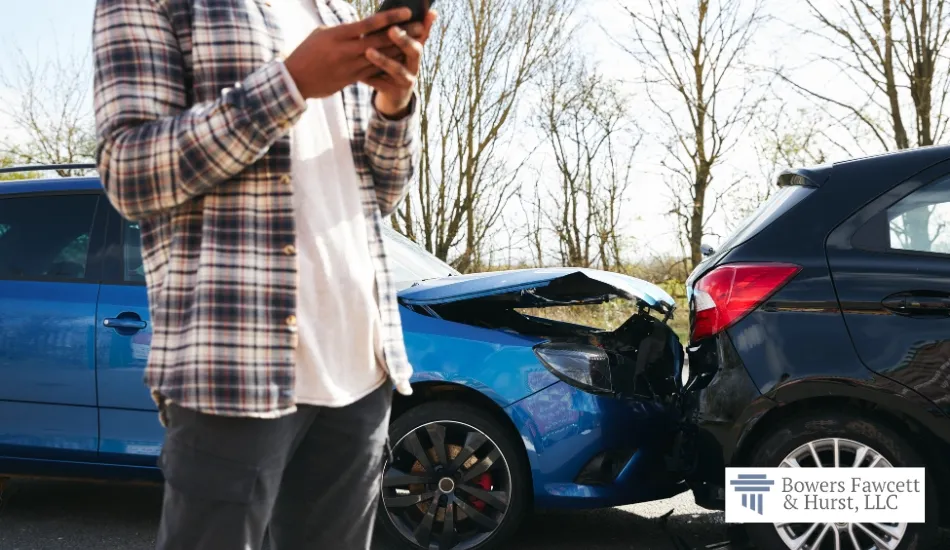
In the blink of an eye, a car accident can completely change the course of your day. Between injuries, property damage, and the stress of not knowing what to do next, it’s easy to feel overwhelmed. Partnering with a seasoned Ambridge car accident lawyer can help you find answers and bring clarity to your situation.
Whether you are dealing with local traffic issues, insurance problems, or unique accident factors, each case is different. Bowers Fawcett & Hurst, LLC advocates for accident victims throughout Beaver County who are struggling to understand their legal options.
Bowers Fawcett & Hurst, LLC is a Beaver County-based law firm with over 45 years of collective legal experience in car accident cases. Over the decades, our presence in Beaver County has allowed us to gain valuable experience with local courts, insurance providers, and road conditions.
We approach each case with a trial-ready mindset, maintaining clear and accessible communication with every client. Bowers Fawcett & Hurst, LLC offers consultations for personal injury claims and represents clients on a contingency fee basis.
Choosing between limited and full tort is an important decision when purchasing auto insurance in Pennsylvania. This decision can have a significant impact on a car accident claim. Limited tort coverage can limit an individual’s ability to recover compensation for certain types of damages, such as pain and suffering, unless the individual has suffered a serious injury.
Full tort coverage provides more freedom to recover damages in a car accident claim. Determining which tort coverage applies to an individual’s car accident claim can be a critical issue in these cases.
Accidents in Ambridge and throughout Beaver County typically result from a combination of factors involving both driver behavior and road conditions. High incident areas, such as Pennsylvania Route 65 and Duss Avenue, are areas where rear-end collisions, intersection-related crashes, and lane-change accidents often occur due to high traffic flow and merging lanes.
Additionally, issues like distracted driving and DUI-related incidents continue to occur. The Pennsylvania Department of Transportation reported over 110,000 crashes in 2024, showing how these factors frequently lead to collisions.
Vehicle damage and injury severity are two factors that may directly affect the valuation of a car accident claim. Insurers might compare repair estimates, photographs, and points of impact with medical records to determine consistency between reported injuries and vehicle damage. If damage to the vehicle is minor, there may be closer scrutiny of the injury claim.
In contrast, extensive vehicle damage could substantiate arguments relating to the force of impact or points of contact during the accident. The severity of injuries, duration of treatment, and long-term effects are also considered. The assessment of vehicle damage and injury severity is often considered together, influencing an insurer’s negotiation approach and the overall valuation of a claim.
Medical records are a key part of a personal injury claim evaluation. Treatment notes, diagnostics, and provider documentation can help to prove the severity of an injury and how it develops over time. Missed appointments or inconsistent documentation can lead to issues during the claims process.
In more complex cases, long-term treatment and evaluations by specialists may be used to provide evidence of longer-term impact. Maintaining thorough records and following up with recommended care can help make sure that a full picture of an injury is available for review.
Motor vehicle accidents in Pennsylvania can lead to serious injuries. The Pennsylvania Department of Transportation reports that traffic crashes resulted in 1,127 fatalities and another 66,950 injuries in 2024. Collisions can happen under a variety of circumstances and result in anything from minor to catastrophic damage. These figures are reported as part of PennDOT’s annual crash data collection and analysis.
Determining fault after a car accident in Pennsylvania involves examining evidence like crash reports, witness statements, and damage to vehicles. Insurance companies, and sometimes courts, assess how each driver’s actions contributed to the accident. Pennsylvania’s comparative negligence system allows for shared responsibility. The degree of fault assigned to each party influences the handling of a claim and potential recovery.
In Pennsylvania, it is possible to claim damages after a crash if you are partly at fault, depending on the extent of your liability. The state’scomparative negligence act allows recovery as long as your share of fault does not exceed 50%. Damages are generally reduced according to your percentage of fault, making it crucial to accurately assess the role of each party in the accident.
Evidence in an auto accident case can include various forms of documentation and physical proof. Photographs of the accident scene, vehicle damage, and road conditions may help determine how the collision occurred. Medical records and treatment history are also used to link injuries to the incident.
Other types of evidence, such as traffic camera footage or electronic data from vehicles can further clarify the events. Strong and consistent evidence often plays a critical role in the evaluation of a claim.
After a car accident, there are often questions that extend beyond injuries and vehicle damage. If multiple factors are involved, such as issues with insurance or fault, those details can come up in quick succession. By organizing the process with an Ambridge car accident lawyer, the situation becomes more manageable, and important details can be addressed early on.
Bowers Fawcett & Hurst, LLC advocates for those throughout Beaver County, including in matters related to car accidents. With a focus on preparation and clear communication, we can address your situation. By taking action early, you can preserve key information and better position a claim moving forward. Schedule a consultation to hire a car accident lawyer today in Ambridge.

820 Kennedy Dr.,
Ambridge, PA 15003
Monday – Friday 9:00 am – 5:00 pm,
Weekends & Evenings By Appointment
Fields Marked With An “*” Are Required
"*" indicates required fields
© 2026 Bowers Fawcett & Hurst, LLC• All Rights Reserved. Disclaimer | Site Map | Privacy Policy. Digital Marketing By: 
*Images are obtained under license from Canva and other third-party stock image providers, with attribution included where required.